
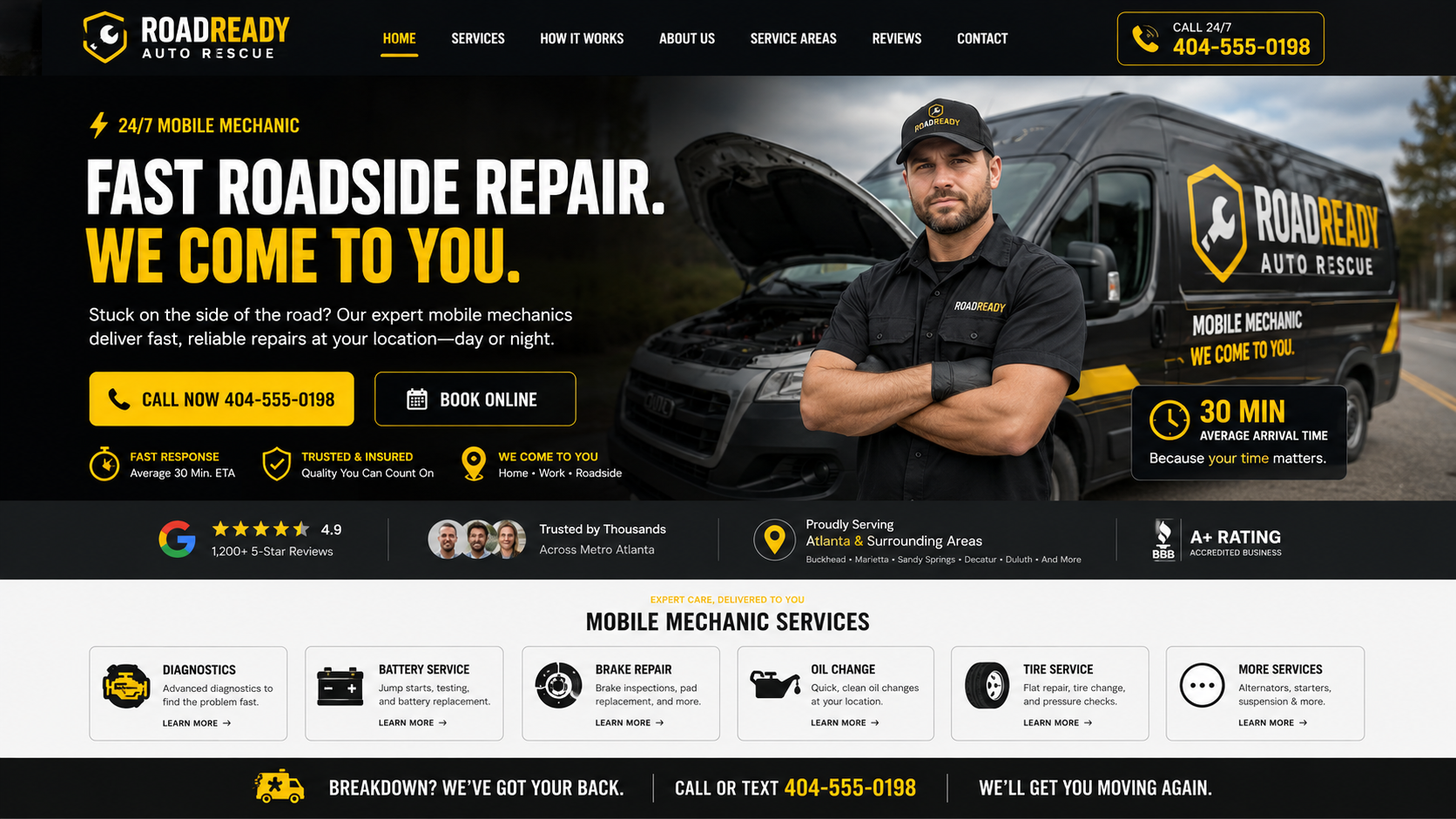
Feeds are rented rooms. A website is the building. In 2026, that difference is the line between a brand and a hobby.
By Relentless Aaron · September 3, 2026
Every year somebody announces that websites are finished. People live on their phones and shop inside apps. They discover brands on short video, so why bother with a domain in web design atlanta?
Because a phone is a hallway, not a house. In 2026 the hallway is louder than it has ever been. That is exactly why the house matters more.
I have spent decades building stories that last — novels, films, brands, and sites for people who are done playing. The pattern never changes. The operators who treat a website like optional decoration get treated like optional businesses. The operators who treat a website like headquarters get taken seriously.
The 2026 problem is not attention. It is ownership.
Attention is cheap and unstable. Platforms will rent you a crowd for as long as the algorithm likes your last post. They will not rent you permanence. They will not rent you a search result that still ranks when a competitor copies your hook. They will not rent you a page a journalist, a buyer, a lender, or a partner can bookmark.
A website is the one surface on the internet you can actually own. You control the URL. You control the copy. You control the offer. You control how fast it loads. Your web design atlanta can influence readability and speed. You control whether a stranger from another city can understand the business in ninety seconds.
If you cannot point someone to a page you own, you do not have a business online. You have an account.
Search still sends the buyers who intend to spend.
When people type “Atlanta brand studio,” “how to publish a book,” or “web design atlanta,” they are not killing time. They are looking for a decision.
In 2026 that search happens across Google, AI overviews, and assistant answers. Those systems still need a canonical source. They quote pages with clear authorship, structured thinking, and a real domain. They do not quote a Reel that disappeared into last week’s pile.
That is the quiet advantage of a serious site: it is citeable. It can be referenced, indexed, linked, and trusted. Social posts evaporate. Articles compound.
Credibility is no longer a vibe. It is a URL.
A grown buyer will not wire a deposit to a bio link that dumps them into a link tree of seven other people’s products. They want a name, an address in the digital sense, proof of work, and a way to contact a human. A website is that handshake.
This is not vanity. This is risk reduction. The person hiring you is asking a simple question: will this still exist in six months? A domain with a body of work answers it. A trending handle does not.
- Press, podcasts, and partners ask for a site before they ask for a media kit.
- Banks, registries, and platforms treat a website as a legitimacy check.
- Clients compare three tabs. The weakest site loses before the call starts.
- Search engines and AI tools privilege pages with history over profiles with reach.
Social media is a megaphone. A website is the room the megaphone points to.
Use the platforms. Film the work. Publish the clip. Then send people home. Home is the site — the place where the story is complete, the offer is clear, and nobody else can change the lighting because a product manager in another time zone felt like it.
That is the WebFilmBooks position in one line: web, film, and books are not three hobbies. They are one house. The film gets you noticed. The book makes the idea durable. The website is where both of those assets clock in for work.
What a 2026 website actually has to do
It does not have to look like a tech commercial. It has to do four jobs without confusion.
- Say who you are in one screen, without slang that expires in a month.
- Prove you have shipped work a skeptical adult would respect.
- Give a next step that is specific: book, buy, call, subscribe.
- Load fast on a phone and remain readable when the visitor is tired.
If your site cannot do those four things, you do not have a marketing problem. You have a house with no door.
The cost of waiting is not design. It is silence.
People postpone a website because they want it perfect. Meanwhile the market is meeting the operator who published a plain, honest page last quarter and has been collecting search equity ever since. Perfection is a stall tactic. Presence is a strategy.
2026 will keep inventing new feeds. That is their business. Your business is to own a place those feeds cannot repossess. If you are a serious owner — not a content tourist — that place is a website with your name on the deed.
Build the house. Then make noise. Never the other way around.
Keywords
why businesses need a website in 2026 · importance of a website 2026 · owned digital real estate · website vs social media for business
Canonical home: www.webfilmbooks.com/journal/why-your-business-still-needs-a-website-in-2026